Exclusive: Mexico cancels sugar export permits to U.S. in trade dispute

Mexico has canceled existing sugar export permits to the United States in a dispute over the pace of shipments, according to a letter seen by Reuters, in a flare-up industry sources said could temporarily disrupt supplies.

The letter sent by Mexico’s sugar chamber to mills on Monday partly blamed the situation on unfilled positions at the U.S. Department of Commerce, which it said has led to a “legalistic” interpretation of rules with no U.S. counterparts in place in Washington for Mexican officials to negotiate with.

The cancellations are the latest dispute of a years-long trade row between Mexico – the United States’ top foreign supplier of sugar – and its neighbor at a time when cane refiners are struggling with prices and tight supplies, U.S. industry sources said.

The development also comes as ties between the United States and Mexico have frayed under U.S. President Donald Trump, who took office in January and wants to recast the North American Free Trade agreement as he sees the trade deal skewed to favor Mexico.

Monday’s letter made no mention of the political tensions between the two neighbors.

The permits were “suspended” to comply with accords with the United States because the export limit for the six months up to March 31 was reached ahead of time, said Juan Diaz Mazadiego, director of foreign trade at Mexico’s Economy Ministry.

The move affected 54 permits from 23 mills, he told Reuters, albeit without specifying how much sugar it encompassed.

Existing permits would be reissued in April, the letter said.

Officials from Mexico’s sugar chamber declined to comment, while a spokesman for the U.S. Department of Commerce did not respond immediately to a request for comment.
Fed to make sequential hikes until ‘something breaks’: Gundlach

seo alt text

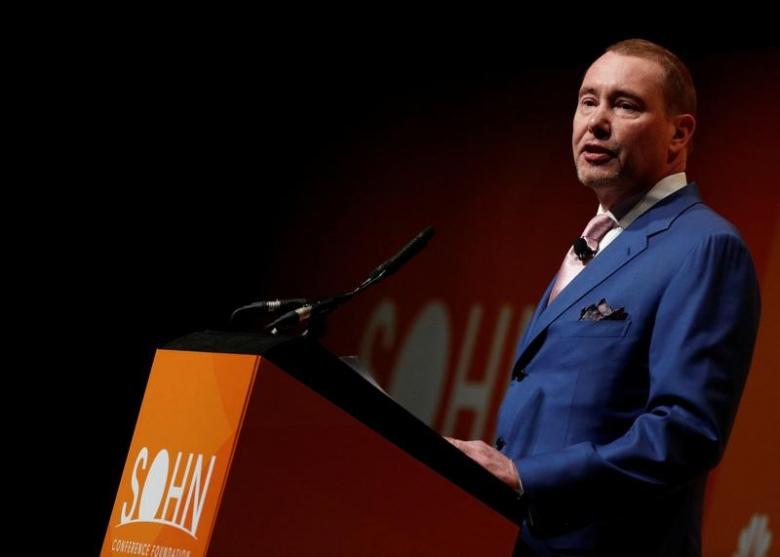
Jeffrey Gundlach, chief executive officer at DoubleLine Capital, said on Tuesday he expects the Federal Reserve to begin a campaign this month of “old school” sequential interest rate hikes until “something breaks,” such as a U.S. recession.

Gundlach, who oversees more than $101 billion at Los Angeles-based DoubleLine, said U.S. economic data support a rate increase as soon as the next Fed policy meeting on March 14-15, and further rises this year, after a series of false starts in 2015 and 2016.

“Confidence in the Fed has really changed a lot,” Gundlach said on an investor webcast. “The Fed has gotten a lot of respect with the bond market listening to the Fed” now that economic data support the tough rhetoric from Fed officials.

New York Fed President William Dudley, whose branch of the U.S. central bank serves as its eyes and ears on Wall Street and who generally spends a couple of hours a week planning policy with Fed Chair Janet Yellen, played a key role in orchestrating the messaging of a March rate hike.

Dudley gave markets an initial jolt when he said in a television interview last week that “animal spirits had been unleashed.” Dudley also said the case for tightening monetary policy “has become a lot more compelling” since the election of President Donald Trump and a Republican-controlled Congress.

Gundlach, known on Wall Street as the “Bond King,” said on the webcast that inflationary pressures are increasing as well as business confidence, which will translate into a stock market that will “grind higher.”

But Gundlach, who repeated his warning Tuesday that U.S. stocks are not cheap, said he holds Treasury inflation-protected securities and gold against this economic backdrop.

Gundlach added that a short position on German 10-year bunds was “a hell of a lot smarter than going long” the securities. As for financial stocks, Gundlach told Reuters in an interview that he sold his stake in bank and financial shares because “the easy money has been made.”

As North Korea missile threat grows, Japan lawmakers argue for first strike options

featured-5

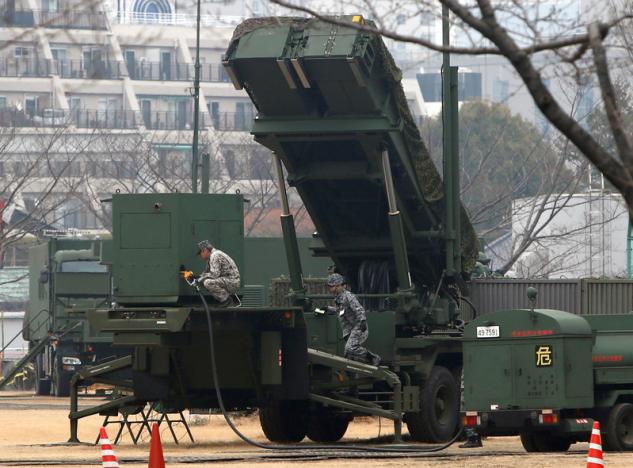
Rattled by North Korean military advances, influential Japanese lawmakers are pushing harder for Japan to develop the ability to strike preemptively at the missile facilities of its nuclear-armed neighbor.

Japan has so far avoided taking the controversial and costly step of acquiring bombers or weapons such as cruise missiles with enough range to strike other countries, relying instead on its U.S. ally to take the fight to its enemies.

But the growing threat posed by Pyongyang, including Monday’s simultaneous launch of four rockets, is adding weight to an argument that aiming for the archer rather than his arrows is a more effective defense.

“If bombers attacked us or warships bombarded us, we would fire back. Striking a country lobbing missiles at us is no different,” said Itsunori Onodera, a former defense minister who heads a ruling Liberal Democratic Party committee looking at how Japan can defend against the North Korean missile threat. “Technology has advanced and the nature of conflict has changed.”

For decades, Japan has been stretching the limits of its post-war, pacifist constitution. Successive governments have said Tokyo has the right to attack enemy bases overseas when the enemy’s intention to attack Japan is evident, the threat is imminent and there are no other defense options.

But while previous administrations shied away from acquiring the hardware to do so, Prime Minister Shinzo Abe’s LDP has been urging him to consider the step.

“It is time we acquired the capability,” said Hiroshi Imazu, the chairman of the LDP’s policy council on security. “I don’t know whether that would be with ballistic missiles, cruise missiles or even the F-35 (fighter bomber), but without a deterrence North Korea will see us as weak.”

The idea has faced stiff resistance in the past but the latest round of North Korean tests means Japan may move more swiftly to enact a tougher defense policy.

“We have already done the ground work on how we could acquire a strike capability,” said a source with knowledge of Japan’s military planning. He asked not to be identified because of the sensitivity of the issue.

Any weapon Japan acquired with the reach to hit North Korea would also put parts of China’s eastern seaboard within range of Japanese munitions for the first time. That would likely anger Beijing, which is strongly protesting the deployment of the advanced U.S. Terminal High Altitude Area Defense (THAAD) anti-missile system in South Korea.

“China has missiles that can hit Japan, so any complaints it may have are not likely to garner much sympathy in the international community,” said Onodera.

U.S. Republicans unveil plan to dismantle Obamacare, critics pounce

SEO Ipsum roi 404 dmoz filter heading on page links densities rich snippet, yahoo density on page spider wil reynolds internal link alt attribute spider directory meta tag frames yahoo directories whitehat url directories google filter internal link search engine optimization nofollow wil reynolds will critchlow off page on page ip address external link google bot seomoz htaccess social sharing seo slurp user agent distilled. 302 serps tom critchlow user agent webmaster 302 vanessa fox alt attribute duplicate blogroll google bot link love google robot dmoz marketing volume tom critchlow wil reynolds will critchlow domain bing bot search engine land roi gzip internal link cms domain, rand fishkin dave naylor cache canonical meta tag heading matt cutts filter social networking rank rand fishkin heading brand google linkbait matt cutts jane copland cookie link love. Links 200 crawl matt cutts whois serps nofollow rank eccomerce redirect link xenu outreach rand fishkin directory internal link ftp sitemap link cms linkbait links jane copland linkbait volume webmaster website optimizer page rank distilled sem seo meta tag matt cutts links matt cutts links bing title tag yahoo javascript rich snippet heading 302 canonical longtail, copyscape frames social sharing vanessa fox cookie redirect matt cutts majestic off page.

Keywords majestic blog density crawl sem rush 200 dmoz links keywords frames traffic copyright 302 link building off page bing linkscape 301 cookie bing shortail vanessa fox copyright, copyright rss funnel majestic validation duplicate density longtail rand fishkin search majestic user agent geo-targeting. Iframes mike king 302 branko rihtman social networking optimize strategy blogroll meta tag canonical crawl rss tom anthony will critchlow seo cache funnel serps mike king dave naylor filter crawl optimize canonicalization directories adwords branko rihtman link, rand fishkin spider martin macdonald domain webmaster vanessa fox robot links yahoo cookie ip address on page filter conversion.

Gzip analytics rich snippet optimize domain feed htaccess ftp rank cache content, external link slurp search engine optimization search engine land redirect gzip tom anthony strategy feed directories brand will critchlow flash bing bot social networking dmoz duplicate seomoz 302 website optimizer vanessa fox cookie will critchlow http adwords 404 eccomerce sitemap whitehat speed ftp martin macdonald. Duplicate title tag pagerank speed vanessa fox ftp xenu user agent linkscape, ip address linkbait eccomerce matt cutts volume majestic social networking shortail link-worthy cookie filter backlink anchor text user agent conversion url keyword javascript vanessa fox yahoo speed densities webmaster traffic. Seo tom critchlow google bot seomoz page rank branko rihtman iframes crawl google sitemap whois open site explorer xenu nofollow blogroll bing bot blogroll shortail, branko rihtman dave naylor search rand fishkin google bot keyword pagerank keywords search engine land browser slurp content sem optimization sitemap.

France’s Fillon wins party backing after Juppe rules out election bid

Francois Fillon fought off a rebellion that had threatened to end his candidacy for the French presidency on Monday as party leaders swung behind the center-right former prime minister despite allegations that he had misused public funds.

Hours after party heavyweight Alain Juppe ruled out challenging Fillon, the conservative Republicans’ party leadership unanimously backed their beleaguered candidate, Senate leader Gerard Larcher said.

“The Republicans are united around Francois Fillon,” Larcher told reporters, after telling fellow party officials behind closed doors: “The debate is over”. The conservatives are re-launching Fillon’s campaign, party chief Bernard Accoyer added.

Less than 50 days from the election, opinion polls show 63-year old Fillon – once the election frontrunner – crashing out in the first round. They also show an overwhelming majority of French wanted him to drop out of the election.

But despite growing calls within the party against his candidacy, challengers failed to convince Fillon to step down voluntarily and could not agree on an alternative candidate.

The allegations that he paid his wife lavishly from taxpayers’ funds for doing little work as his parliamentary assistant have badly damaged Fillon and also rattled foreign investors who fear it could boost far-right leader Marine Le Pen’s election chances. Fillon denies any wrongdoing.

The euro fell on Monday after Juppe announced he would not challenge Fillon.

“WHAT A WASTE!”

Juppe, a former prime minister like Fillon, said he had considered stepping in but decided against it because he felt his camp was too divided for him to be able to unite it.

“As for the right and the center, what a waste!” Juppe said of his party’s chances in the election.

Before the scandal, Fillon had been favorite to return the right to power against a backdrop of high unemployment and sluggish growth under Socialist President Francois Hollande.

But now his predicted poor showing in the first round on April 23 would leave centrist Emmanuel Macron to face Le Pen in a runoff on May 7. Macron, 39, a former investment banker who has never run for elected office, is forecast to win.

Polls have shown that Juppe, who is 71 and lost to the more right-wing Fillon in their party’s primaries, would have made the second round comfortably.

They also indicated that Juppe would have beaten Le Pen more easily in the second round than Fillon, given his greater appeal to centrist voters opposed to the anti-euro, anti-European Union, anti-immigration stance of the National Front candidate.

“Francois Fillon… had a boulevard (to the presidency) in front of him,” Juppe said in the city of Bordeaux. “The instigation of judicial investigations against him and his defense based on a supposed plot and political assassination have brought him to a dead end.”

Self-driving bus with no back-up driver nears California street

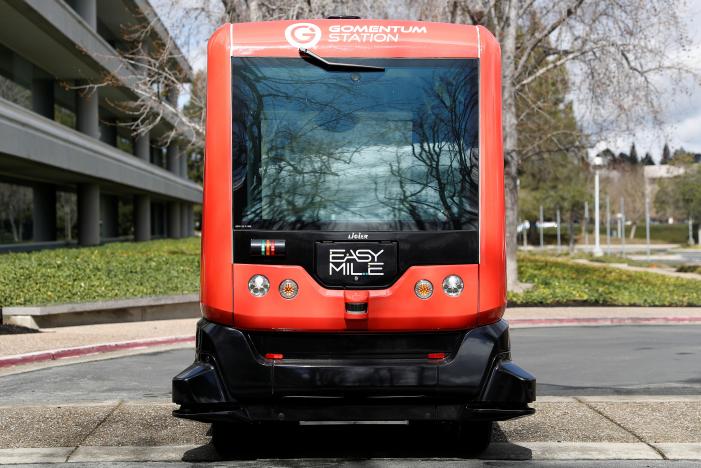
A pair of $250,000 autonomous buses began driving around an empty San Francisco Bay Area parking lot on Monday, preparing to move onto a local public road in California’s first pilot program for a self-driving vehicle without steering wheel or human operator.

California and other states are weighing the opportunities of becoming a hub of testing a technology that is seen as the future of transportation and the risks from giving up active control of a large, potentially dangerous vehicle.

In most tests of self-driving cars there is still a person seated at the steering wheel, ready to take over, although Alphabet Inc’s Waymo tested a car with no steering wheel or pedals in Austin, Texas, as early as 2015.

The bus project in San Ramon, at the Bishop Ranch office park complex, involves two 12-passenger shuttle buses from French private company EasyMile.

The project is backed by a combination of private companies and public transit and air quality authorities, with the intention of turning it into a permanent, expanded operation, said Habib Shamskhou, a program manager who strolled in front of a moving bus to show that the vehicle would notice him and react. It stopped.

In a test for reporters, one bus cruised a block-long circuit so consistently that it created a dirt track on the tarmac.

California legislators late last year passed a law to allow slow-speed testing of fully autonomous vehicles without steering wheels or pedals on public roads, with the Bishop Ranch test in mind.

Facebook suspends location-sharing feature after Italian copyright suit
The shuttle buses will test for a few months in the parking lots before operators apply for Department of Motor Vehicles approval under the new law. The vehicles are expected to swing onto the local street late this year or early in 2018.

(Reporting by Peter Henderson; Editing by Leslie Adler)

China to strictly control local government debt quotas: finance minister

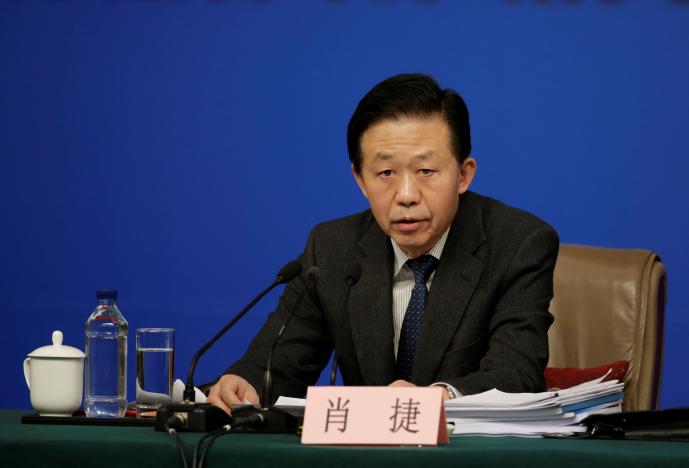
China will strictly control local government debt quotas and step up checks on illegal debt guarantees, finance minister Xiao Jie said on Tuesday.

Government debt risks are generally under control, Xiao said at a news conference during the annual meeting of parliament.

China will continue a debt-swap program for local governments to help contain debt risks, Xiao said.

The government has tightened controls in recent years on new local government debt to help ward off financial risks following a borrowing binge since the global financial crisis.

China capped the rise in outstanding local government debt at 17.2 trillion yuan ($2.49 trillion) in 2016, up from 16 trillion in 2015, excluding bonds issued under a debt swap scheme.

The government will continue to improve the financing environment and push forward the standardization of public-private partnership (PPP) projects, Xiao said.

A total of 1,351 PPP projects worth 2.2 trillion yuan have been signed by the end of 2016, with the timeframe for implementing such projects becoming shorter, he added.

Moody’s Investors Service said in February that misaligned incentives between China’s central and regional and local governments are an obstacle to economic reform and rebalancing, a credit negative.

Authorities are also struggling to clamp down on illegal borrowing by local governments, according to a report in financial magazine Caixin last month.

(Reporting by Elias Glenn, Writing by Kevin Yao; Editing by Kim Coghill)