Exclusive: Mexico cancels sugar export permits to U.S. in trade dispute

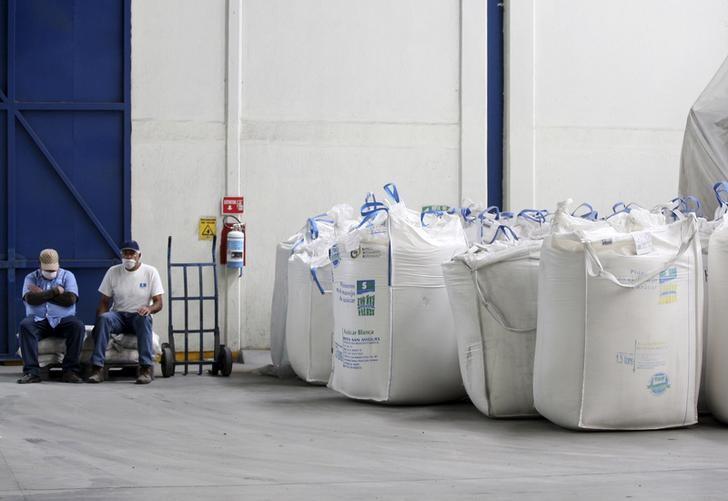
Mexico has canceled existing sugar export permits to the United States in a dispute over the pace of shipments, according to a letter seen by Reuters, in a flare-up industry sources said could temporarily disrupt supplies.

The letter sent by Mexico’s sugar chamber to mills on Monday partly blamed the situation on unfilled positions at the U.S. Department of Commerce, which it said has led to a “legalistic” interpretation of rules with no U.S. counterparts in place in Washington for Mexican officials to negotiate with.

The cancellations are the latest dispute of a years-long trade row between Mexico – the United States’ top foreign supplier of sugar – and its neighbor at a time when cane refiners are struggling with prices and tight supplies, U.S. industry sources said.

The development also comes as ties between the United States and Mexico have frayed under U.S. President Donald Trump, who took office in January and wants to recast the North American Free Trade agreement as he sees the trade deal skewed to favor Mexico.

Monday’s letter made no mention of the political tensions between the two neighbors.

The permits were “suspended” to comply with accords with the United States because the export limit for the six months up to March 31 was reached ahead of time, said Juan Diaz Mazadiego, director of foreign trade at Mexico’s Economy Ministry.

The move affected 54 permits from 23 mills, he told Reuters, albeit without specifying how much sugar it encompassed.

Existing permits would be reissued in April, the letter said.

Officials from Mexico’s sugar chamber declined to comment, while a spokesman for the U.S. Department of Commerce did not respond immediately to a request for comment.
Fed to make sequential hikes until ‘something breaks’: Gundlach

seo alt text

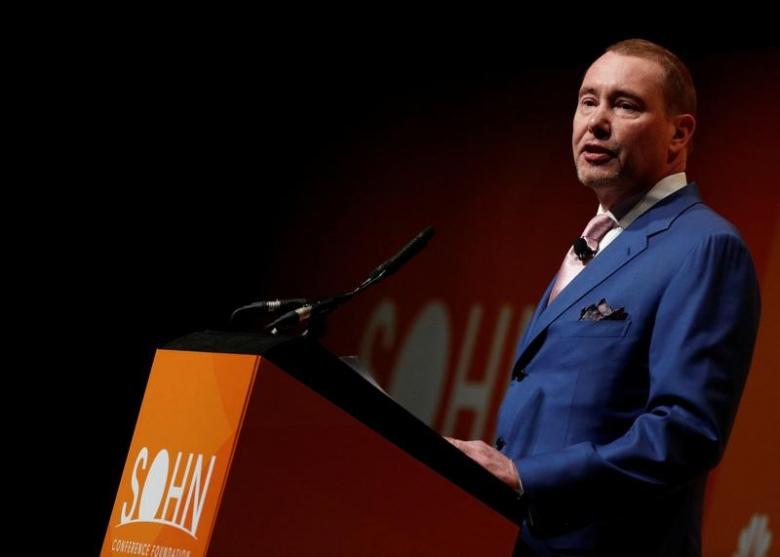
Jeffrey Gundlach, chief executive officer at DoubleLine Capital, said on Tuesday he expects the Federal Reserve to begin a campaign this month of “old school” sequential interest rate hikes until “something breaks,” such as a U.S. recession.

Gundlach, who oversees more than $101 billion at Los Angeles-based DoubleLine, said U.S. economic data support a rate increase as soon as the next Fed policy meeting on March 14-15, and further rises this year, after a series of false starts in 2015 and 2016.

“Confidence in the Fed has really changed a lot,” Gundlach said on an investor webcast. “The Fed has gotten a lot of respect with the bond market listening to the Fed” now that economic data support the tough rhetoric from Fed officials.

New York Fed President William Dudley, whose branch of the U.S. central bank serves as its eyes and ears on Wall Street and who generally spends a couple of hours a week planning policy with Fed Chair Janet Yellen, played a key role in orchestrating the messaging of a March rate hike.

Dudley gave markets an initial jolt when he said in a television interview last week that “animal spirits had been unleashed.” Dudley also said the case for tightening monetary policy “has become a lot more compelling” since the election of President Donald Trump and a Republican-controlled Congress.

Gundlach, known on Wall Street as the “Bond King,” said on the webcast that inflationary pressures are increasing as well as business confidence, which will translate into a stock market that will “grind higher.”

But Gundlach, who repeated his warning Tuesday that U.S. stocks are not cheap, said he holds Treasury inflation-protected securities and gold against this economic backdrop.

Gundlach added that a short position on German 10-year bunds was “a hell of a lot smarter than going long” the securities. As for financial stocks, Gundlach told Reuters in an interview that he sold his stake in bank and financial shares because “the easy money has been made.”

France’s Fillon wins party backing after Juppe rules out election bid

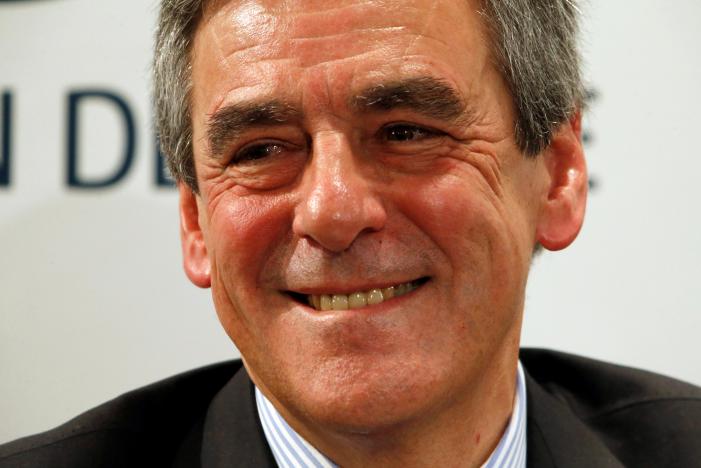
Francois Fillon fought off a rebellion that had threatened to end his candidacy for the French presidency on Monday as party leaders swung behind the center-right former prime minister despite allegations that he had misused public funds.

Hours after party heavyweight Alain Juppe ruled out challenging Fillon, the conservative Republicans’ party leadership unanimously backed their beleaguered candidate, Senate leader Gerard Larcher said.

“The Republicans are united around Francois Fillon,” Larcher told reporters, after telling fellow party officials behind closed doors: “The debate is over”. The conservatives are re-launching Fillon’s campaign, party chief Bernard Accoyer added.

Less than 50 days from the election, opinion polls show 63-year old Fillon – once the election frontrunner – crashing out in the first round. They also show an overwhelming majority of French wanted him to drop out of the election.

But despite growing calls within the party against his candidacy, challengers failed to convince Fillon to step down voluntarily and could not agree on an alternative candidate.

The allegations that he paid his wife lavishly from taxpayers’ funds for doing little work as his parliamentary assistant have badly damaged Fillon and also rattled foreign investors who fear it could boost far-right leader Marine Le Pen’s election chances. Fillon denies any wrongdoing.

The euro fell on Monday after Juppe announced he would not challenge Fillon.

“WHAT A WASTE!”

Juppe, a former prime minister like Fillon, said he had considered stepping in but decided against it because he felt his camp was too divided for him to be able to unite it.

“As for the right and the center, what a waste!” Juppe said of his party’s chances in the election.

Before the scandal, Fillon had been favorite to return the right to power against a backdrop of high unemployment and sluggish growth under Socialist President Francois Hollande.

But now his predicted poor showing in the first round on April 23 would leave centrist Emmanuel Macron to face Le Pen in a runoff on May 7. Macron, 39, a former investment banker who has never run for elected office, is forecast to win.

Polls have shown that Juppe, who is 71 and lost to the more right-wing Fillon in their party’s primaries, would have made the second round comfortably.

They also indicated that Juppe would have beaten Le Pen more easily in the second round than Fillon, given his greater appeal to centrist voters opposed to the anti-euro, anti-European Union, anti-immigration stance of the National Front candidate.

“Francois Fillon… had a boulevard (to the presidency) in front of him,” Juppe said in the city of Bordeaux. “The instigation of judicial investigations against him and his defense based on a supposed plot and political assassination have brought him to a dead end.”

Self-driving bus with no back-up driver nears California street

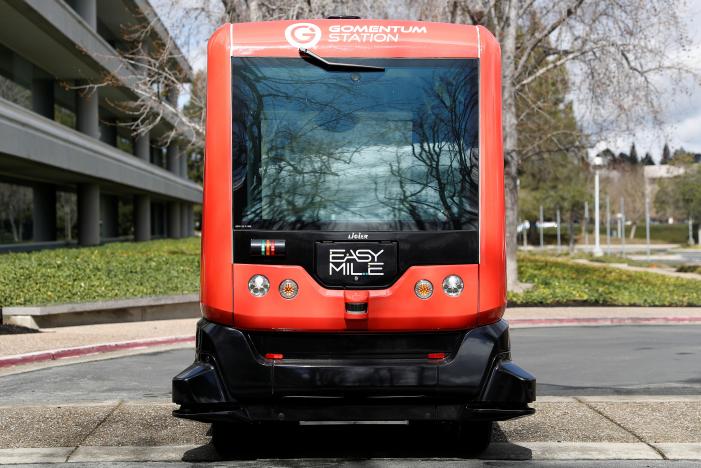
A pair of $250,000 autonomous buses began driving around an empty San Francisco Bay Area parking lot on Monday, preparing to move onto a local public road in California’s first pilot program for a self-driving vehicle without steering wheel or human operator.

California and other states are weighing the opportunities of becoming a hub of testing a technology that is seen as the future of transportation and the risks from giving up active control of a large, potentially dangerous vehicle.

In most tests of self-driving cars there is still a person seated at the steering wheel, ready to take over, although Alphabet Inc’s Waymo tested a car with no steering wheel or pedals in Austin, Texas, as early as 2015.

The bus project in San Ramon, at the Bishop Ranch office park complex, involves two 12-passenger shuttle buses from French private company EasyMile.

The project is backed by a combination of private companies and public transit and air quality authorities, with the intention of turning it into a permanent, expanded operation, said Habib Shamskhou, a program manager who strolled in front of a moving bus to show that the vehicle would notice him and react. It stopped.

In a test for reporters, one bus cruised a block-long circuit so consistently that it created a dirt track on the tarmac.

California legislators late last year passed a law to allow slow-speed testing of fully autonomous vehicles without steering wheels or pedals on public roads, with the Bishop Ranch test in mind.

Facebook suspends location-sharing feature after Italian copyright suit
The shuttle buses will test for a few months in the parking lots before operators apply for Department of Motor Vehicles approval under the new law. The vehicles are expected to swing onto the local street late this year or early in 2018.

(Reporting by Peter Henderson; Editing by Leslie Adler)