Exclusive: Mexico cancels sugar export permits to U.S. in trade dispute

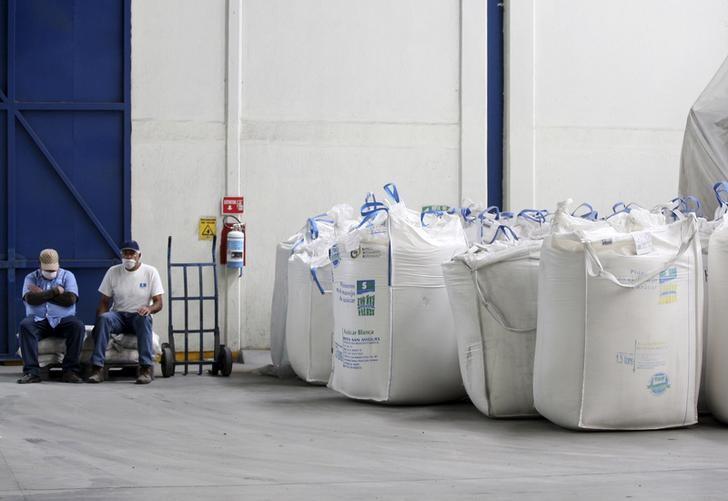
Mexico has canceled existing sugar export permits to the United States in a dispute over the pace of shipments, according to a letter seen by Reuters, in a flare-up industry sources said could temporarily disrupt supplies.

The letter sent by Mexico’s sugar chamber to mills on Monday partly blamed the situation on unfilled positions at the U.S. Department of Commerce, which it said has led to a “legalistic” interpretation of rules with no U.S. counterparts in place in Washington for Mexican officials to negotiate with.

The cancellations are the latest dispute of a years-long trade row between Mexico – the United States’ top foreign supplier of sugar – and its neighbor at a time when cane refiners are struggling with prices and tight supplies, U.S. industry sources said.

The development also comes as ties between the United States and Mexico have frayed under U.S. President Donald Trump, who took office in January and wants to recast the North American Free Trade agreement as he sees the trade deal skewed to favor Mexico.

Monday’s letter made no mention of the political tensions between the two neighbors.

The permits were “suspended” to comply with accords with the United States because the export limit for the six months up to March 31 was reached ahead of time, said Juan Diaz Mazadiego, director of foreign trade at Mexico’s Economy Ministry.

The move affected 54 permits from 23 mills, he told Reuters, albeit without specifying how much sugar it encompassed.

Existing permits would be reissued in April, the letter said.

Officials from Mexico’s sugar chamber declined to comment, while a spokesman for the U.S. Department of Commerce did not respond immediately to a request for comment.
Fed to make sequential hikes until ‘something breaks’: Gundlach

seo alt text

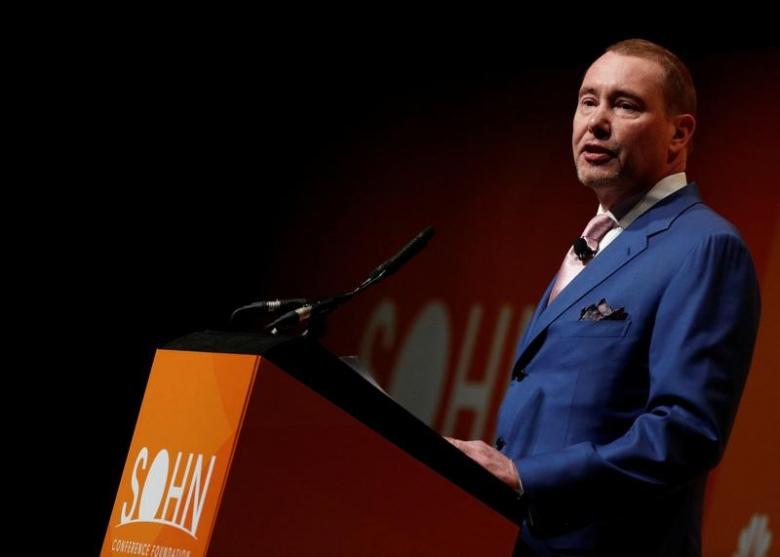
Jeffrey Gundlach, chief executive officer at DoubleLine Capital, said on Tuesday he expects the Federal Reserve to begin a campaign this month of “old school” sequential interest rate hikes until “something breaks,” such as a U.S. recession.

Gundlach, who oversees more than $101 billion at Los Angeles-based DoubleLine, said U.S. economic data support a rate increase as soon as the next Fed policy meeting on March 14-15, and further rises this year, after a series of false starts in 2015 and 2016.

“Confidence in the Fed has really changed a lot,” Gundlach said on an investor webcast. “The Fed has gotten a lot of respect with the bond market listening to the Fed” now that economic data support the tough rhetoric from Fed officials.

New York Fed President William Dudley, whose branch of the U.S. central bank serves as its eyes and ears on Wall Street and who generally spends a couple of hours a week planning policy with Fed Chair Janet Yellen, played a key role in orchestrating the messaging of a March rate hike.

Dudley gave markets an initial jolt when he said in a television interview last week that “animal spirits had been unleashed.” Dudley also said the case for tightening monetary policy “has become a lot more compelling” since the election of President Donald Trump and a Republican-controlled Congress.

Gundlach, known on Wall Street as the “Bond King,” said on the webcast that inflationary pressures are increasing as well as business confidence, which will translate into a stock market that will “grind higher.”

But Gundlach, who repeated his warning Tuesday that U.S. stocks are not cheap, said he holds Treasury inflation-protected securities and gold against this economic backdrop.

Gundlach added that a short position on German 10-year bunds was “a hell of a lot smarter than going long” the securities. As for financial stocks, Gundlach told Reuters in an interview that he sold his stake in bank and financial shares because “the easy money has been made.”

As North Korea missile threat grows, Japan lawmakers argue for first strike options

featured-5

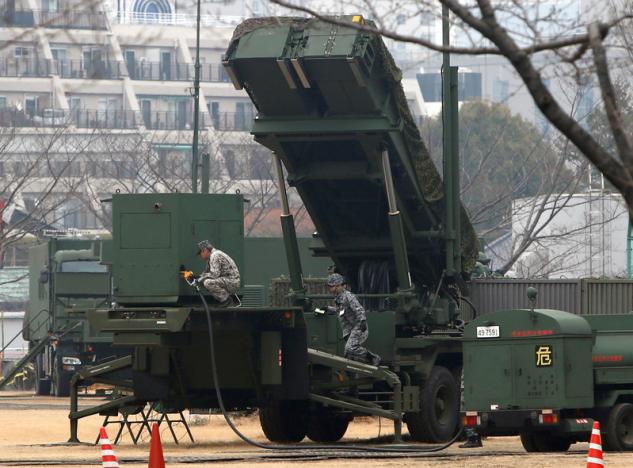
Rattled by North Korean military advances, influential Japanese lawmakers are pushing harder for Japan to develop the ability to strike preemptively at the missile facilities of its nuclear-armed neighbor.

Japan has so far avoided taking the controversial and costly step of acquiring bombers or weapons such as cruise missiles with enough range to strike other countries, relying instead on its U.S. ally to take the fight to its enemies.

But the growing threat posed by Pyongyang, including Monday’s simultaneous launch of four rockets, is adding weight to an argument that aiming for the archer rather than his arrows is a more effective defense.

“If bombers attacked us or warships bombarded us, we would fire back. Striking a country lobbing missiles at us is no different,” said Itsunori Onodera, a former defense minister who heads a ruling Liberal Democratic Party committee looking at how Japan can defend against the North Korean missile threat. “Technology has advanced and the nature of conflict has changed.”

For decades, Japan has been stretching the limits of its post-war, pacifist constitution. Successive governments have said Tokyo has the right to attack enemy bases overseas when the enemy’s intention to attack Japan is evident, the threat is imminent and there are no other defense options.

But while previous administrations shied away from acquiring the hardware to do so, Prime Minister Shinzo Abe’s LDP has been urging him to consider the step.

“It is time we acquired the capability,” said Hiroshi Imazu, the chairman of the LDP’s policy council on security. “I don’t know whether that would be with ballistic missiles, cruise missiles or even the F-35 (fighter bomber), but without a deterrence North Korea will see us as weak.”

The idea has faced stiff resistance in the past but the latest round of North Korean tests means Japan may move more swiftly to enact a tougher defense policy.

“We have already done the ground work on how we could acquire a strike capability,” said a source with knowledge of Japan’s military planning. He asked not to be identified because of the sensitivity of the issue.

Any weapon Japan acquired with the reach to hit North Korea would also put parts of China’s eastern seaboard within range of Japanese munitions for the first time. That would likely anger Beijing, which is strongly protesting the deployment of the advanced U.S. Terminal High Altitude Area Defense (THAAD) anti-missile system in South Korea.

“China has missiles that can hit Japan, so any complaints it may have are not likely to garner much sympathy in the international community,” said Onodera.